When a high-performance engine becomes a canvas for the world's most influential artists, the result is more than just a car—it is a "Moving Sculpture." As we approach the half-century mark of this legendary collaboration, the BMW Art Car Collection remains the ultimate intersection of automotive excellence and high-culture provenance.
50 Years of Rolling Sculptures: The BMW Art Car Legacy
Since 1975, the BMW Art Car project has invited visionaries to reinterpret the car as a medium of artistic expression. What began as a singular vision by racing driver Hervé Poulain has evolved into a peerless lineage of heritage pieces that have graced both the Circuit de la Sarthe and the halls of the Louvre.
The Genesis of an Icon (1975-1979)
The project’s inception was defined by a daring challenge: could a racing livery transcend its utilitarian purpose? Alexander Calder and Frank Stella provided the definitive answer, establishing a dialogue between the aerodynamic silhouette of the BMW 3.0 CSL and the avant-garde movements of the 1970s.
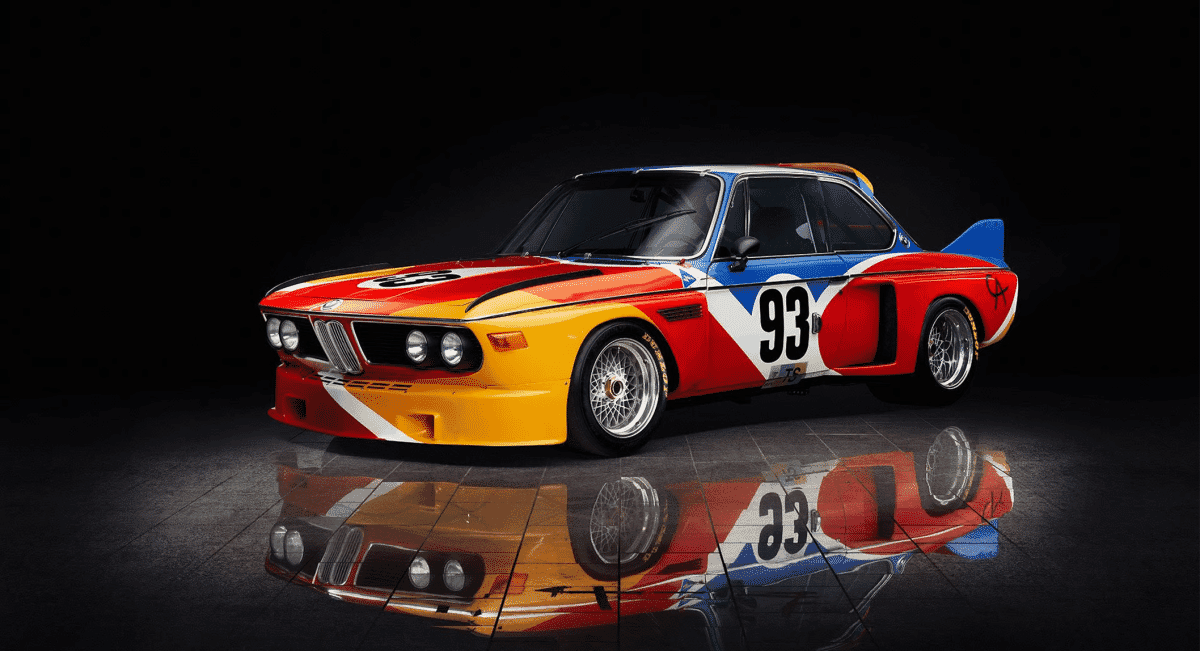

Curator’s Critique: Calder’s usage of bold primary colors and curved forms creates a playful juxtaposition against the aggressive "Batmobile" aero of the 3.0 CSL. In contrast, Frank Stella’s 1976 contribution is an exercise in intellectual precision; his monochrome grid acts as a blueprint come to life, echoing the technical graph paper used by the very engineers who built the engine. Both pieces represent a pivotal moment where the garage became a studio.
Pop Art on the Pavement: Warhol and Lichtenstein
In the late 1970s, the collection took a turn toward the vibrant, kinetic energy of Pop Art. Here, the cars were not just painted; they were transformed into visual narratives of speed and light, capturing the zeitgeist of an era obsessed with celebrity and motion.


Curator’s Critique: Roy Lichtenstein applied his iconic Ben-Day dots to the BMW 320i, creating a literal "landscape in motion" that remains a masterpiece of graphic design. However, it is Andy Warhol’s 1979 M1 that remains the collection’s "Holy Grail." Warhol notably chose to paint the car himself rather than using assistants, applying thick, visceral brushstrokes that seem to bleed together. At 300km/h, Warhol argued, the art would blur into a singular, pure expression of velocity—a conceptual triumph that remains breathtaking today.
Global Perspectives: Cultural Narratives
As the collection matured, it looked beyond the Western canon, embracing global heritage. The inclusion of indigenous artists brought a new depth to the series, proving that the language of art and engineering is truly universal.
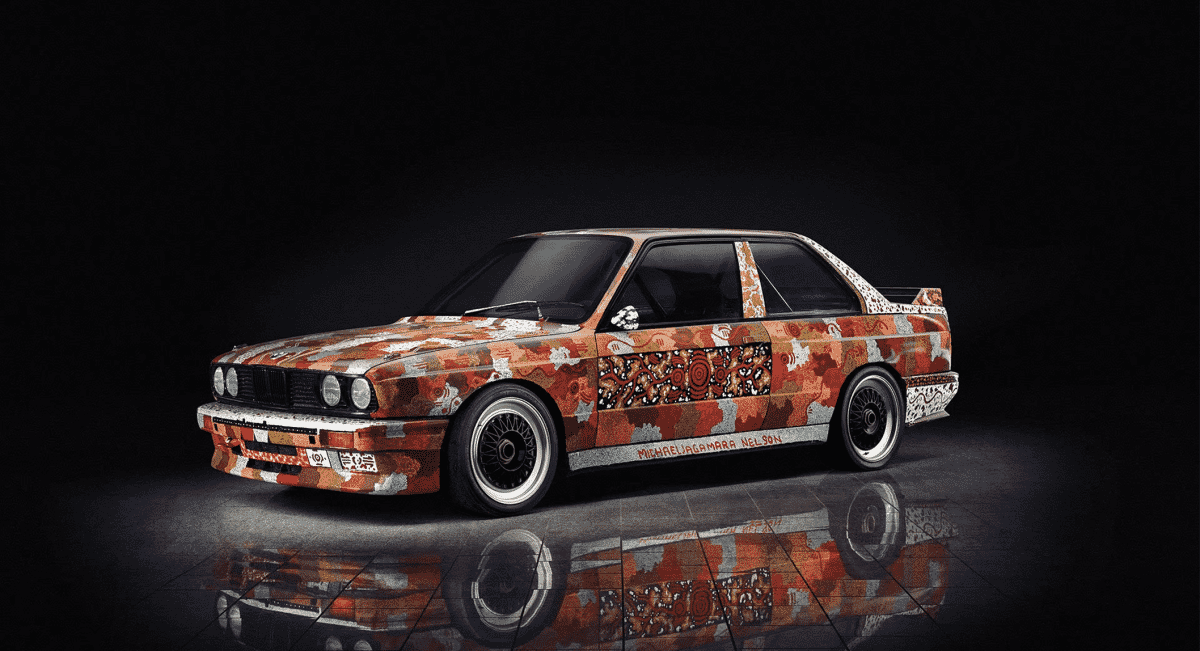
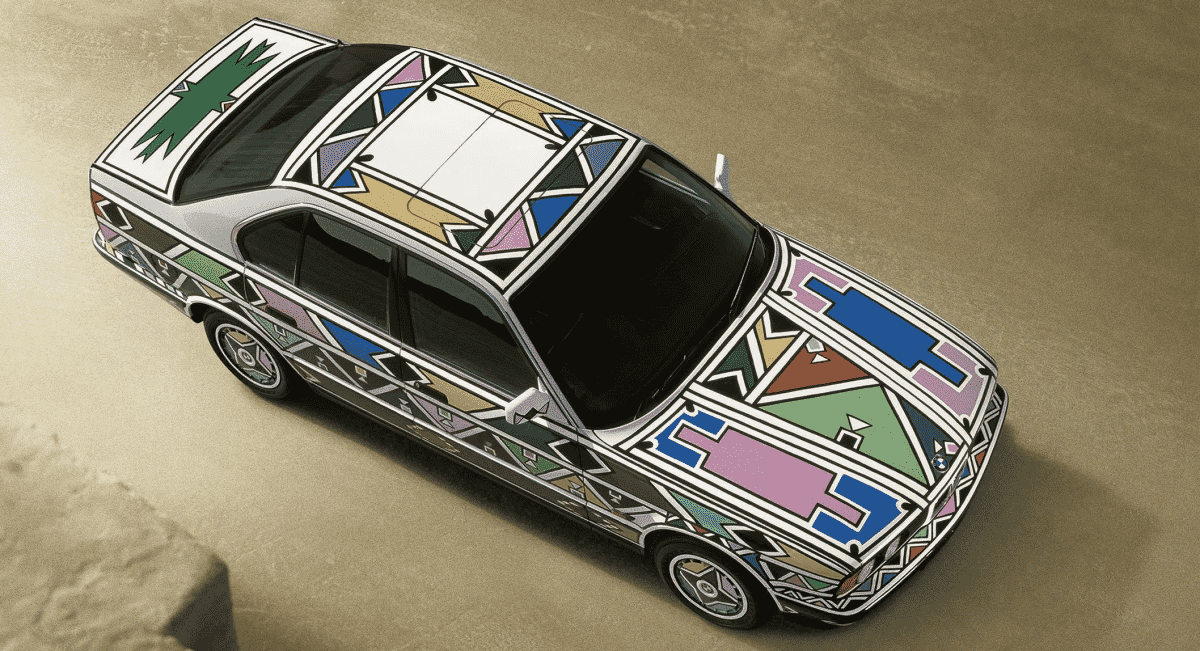
Curator’s Critique: Michael Jagamara Nelson’s M3 is a stunning application of Aboriginal Papunya Tula art, where every dot represents a topographical and spiritual "dreaming." Similarly, Esther Mahlangu’s 1991 525i is a milestone of high-fashion craftsmanship. As the first female artist in the collection, her use of traditional South African Ndebele patterns introduced a geometric soulfulness to the Bavarian sedan, proving that ancestral motifs can feel incredibly modern when applied to industrial design.
Modern Visionaries: Jeff Koons to Cao Fei
In the 21st century, the Art Car evolved from physical paint to digital experience. Artists began to grapple with the concepts of hyper-speed and the intangible nature of the digital age, pushing the boundaries of what a "livery" could be.
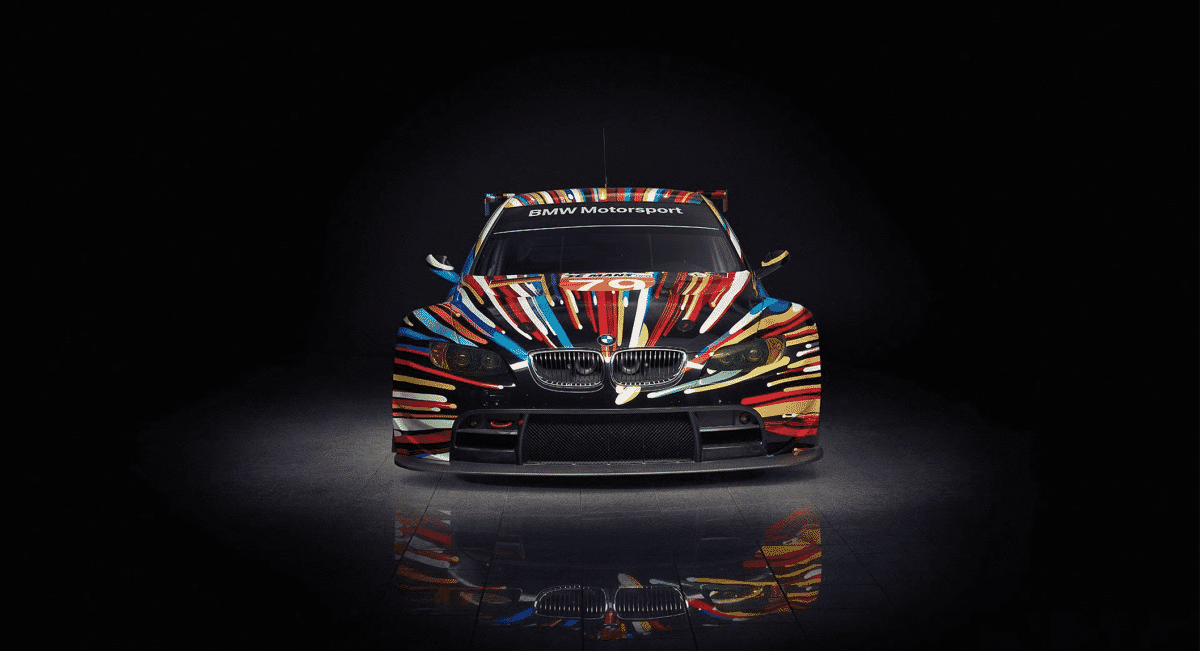

Curator’s Critique: Jeff Koons’ M3 GT2 is perhaps the most "fashion-forward" car in the collection—a saturated explosion of lines that mimics the sheer force of acceleration. It is a maximalist masterpiece. Conversely, Cao Fei’s 2017 M6 GT3 took the collection into the future. By leaving the carbon-fiber chassis black and using an Augmented Reality (AR) app to project light trails over the car, she addressed the invisibility of the digital world, turning the vehicle into a performance piece that exists between the physical and the virtual.
The 20th Masterpiece: Julie Mehretu (2024)
The latest commission marks a return to the legendary 24 Hours of Le Mans. Julie Mehretu’s BMW M Hybrid V8 is a complex, layered landscape that reflects our contemporary world—fluid, obscured, and intensely energetic.
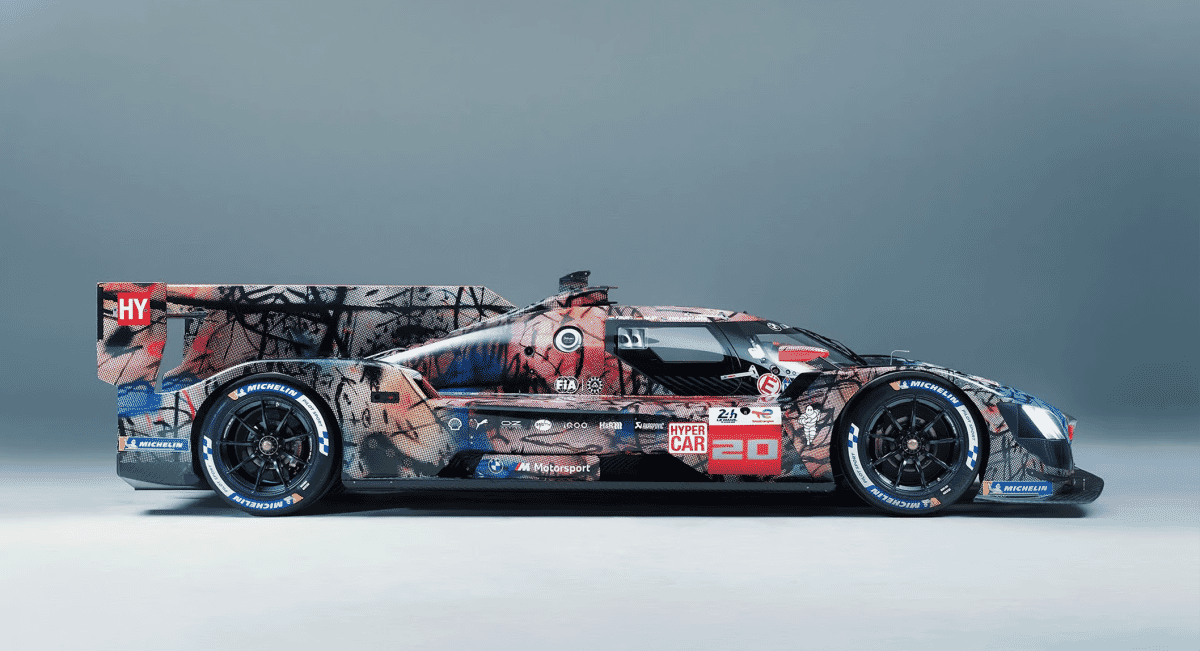
Curator’s Critique: Mehretu’s work is an investment in complexity. She utilized motifs from her own large-scale paintings, including obscured photographs and dot grids, to create a "painting-in-motion." The livery isn't just a wrap; it is a sophisticated layering of history and speed. For the connoisseur, this car represents the pinnacle of modern abstract expressionism meeting cutting-edge hybrid engineering.
The World Tour 2025-2026: Your Global Itinerary
To celebrate 50 years of this storied collection, BMW is launching a comprehensive World Tour. These mechanical masterpieces will be staged in curated environments that highlight their status as fine art rather than mere transport.
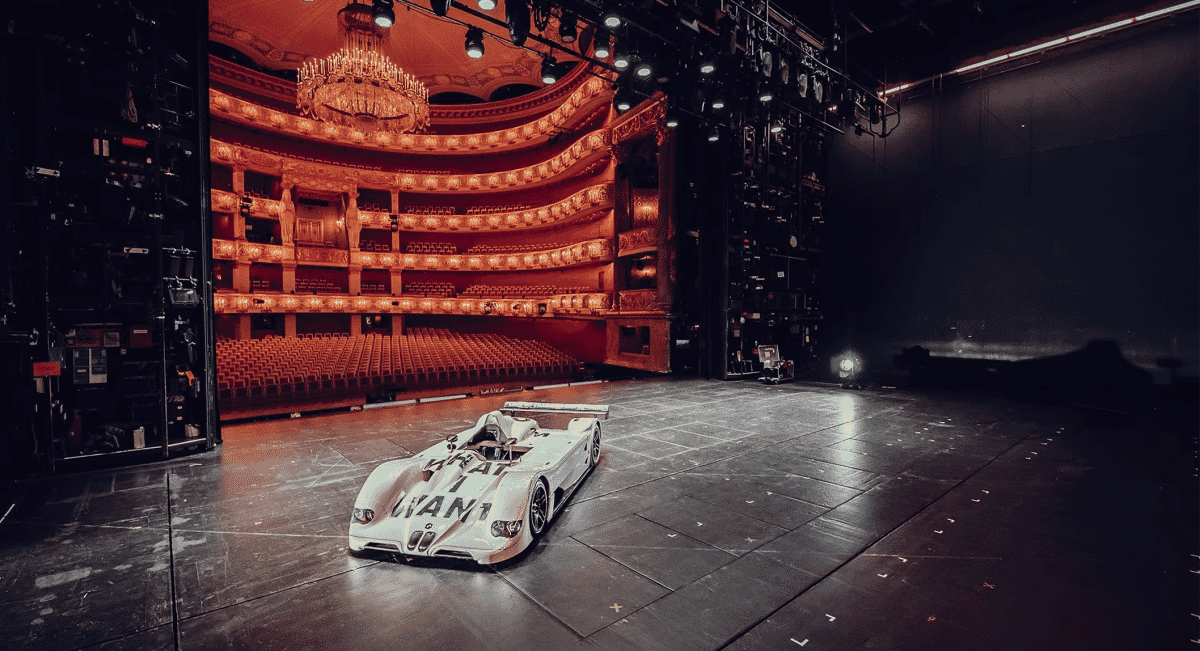
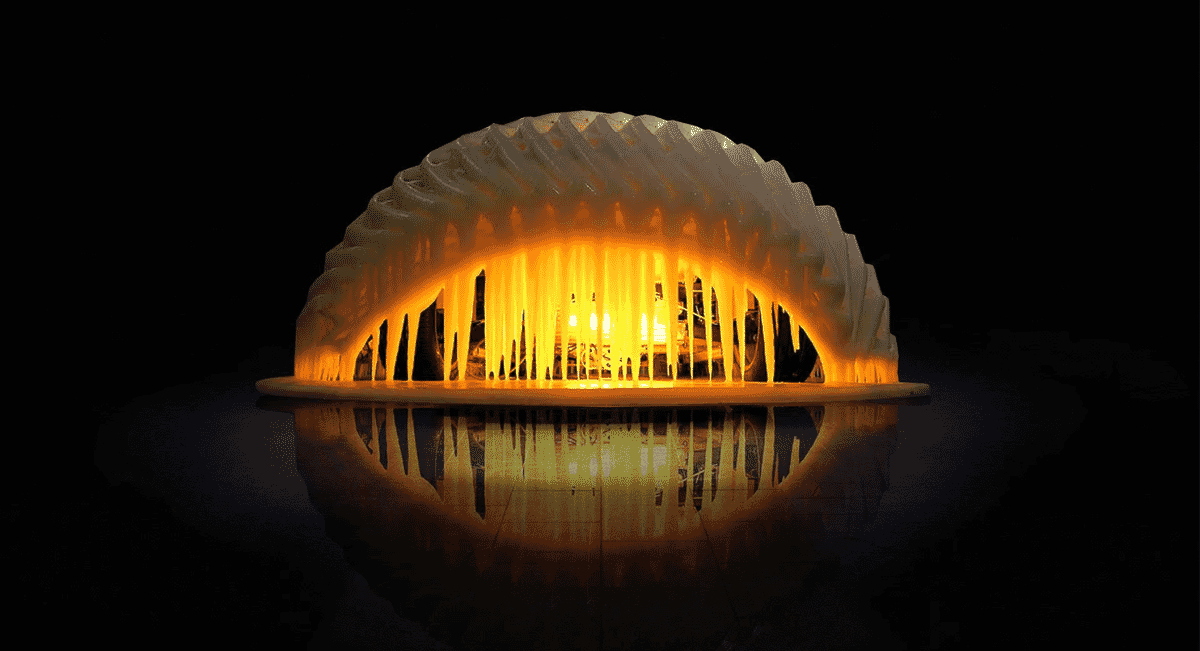
Curator’s Critique: The 2025-2026 World Tour is an unmissable event for those who appreciate the intersection of investment-grade art and elite automotive performance. From the sculptural ice-casing of Olafur Eliasson’s H2R project to the racing pedigree of the V12 LMR, the tour provides a rare opportunity to witness these pieces outside of private archives.
Exhibition Schedule:
- Spring 2025: Vienna State Opera, Austria
- Autumn 2025: West Bund Art & Design, Shanghai
- Winter 2025: M+ Museum, Hong Kong
- Spring 2026: Rétromobile, Paris (Special 50th Anniversary Showcase)
- Summer 2026: BMW Museum, Munich
In the world of luxury, true value lies in the stories we tell. The BMW Art Car Collection is the ultimate narrative of our collective drive toward beauty, speed, and innovation.