If you’ve spent more than five minutes scrolling through your FYP lately, you’ve likely encountered a specific shade of crimson that claims to be more than just a manicure—it’s a social experiment. As a beauty editor, I’ve seen trends come and go, but few have the staying power (or the psychological grit) of the Red Nail Theory.
The Manicure That Broke the Internet
It all started with a viral clip from TikTok creator Robyn Delmonte, who posited a fascinating observation: whenever she wore red nails, she received an unprecedented amount of male attention and compliments. The "Red Nail Theory" quickly evolved from a localized observation into a global beauty phenomenon, racking up hundreds of millions of views. But while the internet loves a good "hack" for attraction, as an editor focused on the why behind the what, I wanted to dig deeper into the biological signaling and nostalgia that make this more than just a saturated hue.
At its core, the theory suggests that red nails act as a subconscious visual cue, triggering a specific psychological response in others. Whether you’re a fan of a classic fire-engine red or a deep, moody oxblood, the color isn't just sitting on your fingertips—it's communicating.
The '90s Nostalgia & The Freud Factor
There is a slightly more Freudian—and arguably more relatable—angle to this trend. Many proponents of the Red Nail Theory argue that the attraction stems from the 1990s and early 2000s, an era when red was the definitive "it" color for the mothers, teachers, and celebrities of the time.
Think back to the iconic bottles of OPI’s Big Apple Red or Revlon’s Cherries in the Snow sitting on a vanity. For a certain generation of men, red nails are associated with the formative figures of their youth, creating a sense of familiarity and "nurturing" aesthetic that feels inherently classic. It’s a nostalgic feedback loop where a specific pigment serves as a bridge to a comforting past, making the wearer appear both timeless and approachable.
The Science of 'Red-Attractiveness'
Beyond nostalgia, there is hard science involved. In a landmark 2008 study published in the Journal of Personality and Social Psychology, researchers Andrew Elliot and Daniela Niesta found that men found women significantly more attractive when they were framed by the color red compared to other colors like blue or green.
From an evolutionary perspective, red is a biological signal of fertility and health. In the animal kingdom, various species use red to signal readiness for mating. While we like to think we’ve evolved past these primal instincts, our brains are still hardwired to notice high-wavelength colors. Red has the longest wavelength of any color in the visible spectrum, meaning it literally reaches our eyes faster and demands more immediate attention than any other shade in your nail tech’s kit.
Putting the Theory to the Test
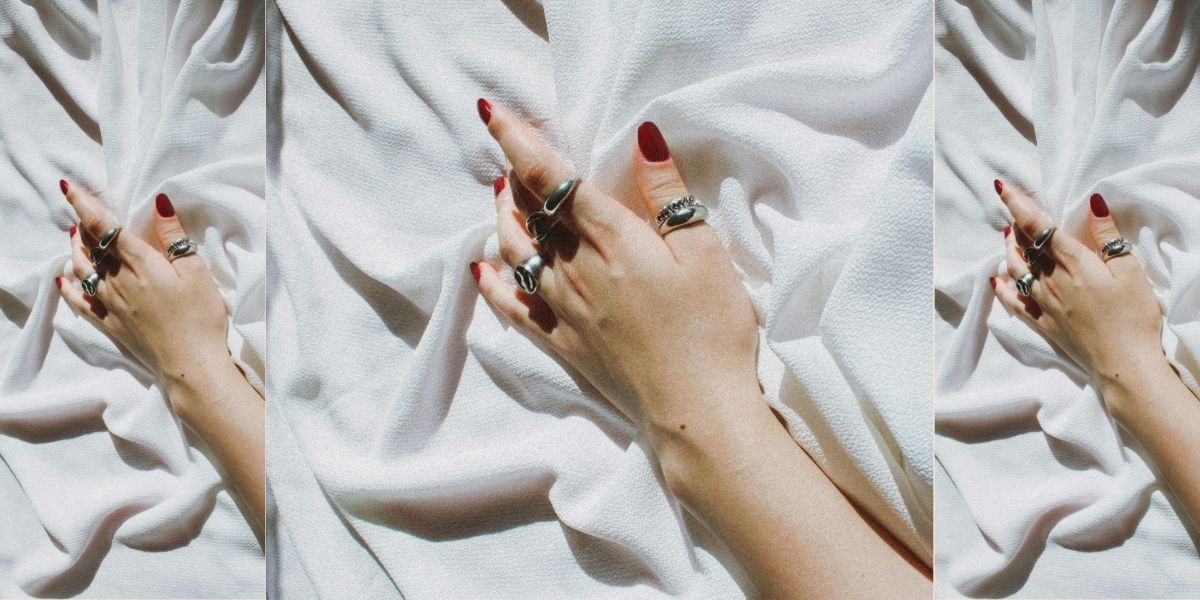
To see if the digital hype translated to real-world results, I decided to "test drive" the theory myself. Usually, I’m a "clean girl" aesthetic devotee—give me a sheer, milky pink or a nude taupe any day. But for this experiment, I opted for a high-gloss, ultra-saturated crimson. The visual impact was immediate. The hand in the image above reflects that exact "POV" experience: the red isn't just a color; it’s a statement of intent.
During a standard date night with my partner, I noticed a subtle but definitive shift. There was more hand-holding, a quicker initiation of physical contact, and a general "bolder approach" in his demeanor. Was it the polish? Or was it the way I held my wine glass with just a bit more intentionality? Even in a long-term relationship, changing a visual cue can break the routine and spark a fresh wave of interpersonal interest.
Is It the Polish or the Person?
This brings us to the ultimate beauty editor’s dilemma: is the "magic" in the bottle, or is it a placebo effect? When you wear a color as bold as red, your body language often shifts to match. You might gesture more with your hands, feel a bit more "main character," and carry yourself with an extra dose of confidence.
Red is a power color. Whether it’s a power suit or a power mani, the wearer often feels more assertive. If you feel more attractive, you project that energy outward, which in turn makes others more likely to respond to you. In the world of color psychology, it’s a chicken-and-egg situation: does the red attract the person, or does the red empower the wearer to be more attractive? The answer is likely both. When selecting your shade, remember that undertones matter—cool, blue-based reds pop on fair skin, while warm, orange-based poppies sing on olive and deep skin tones.
Finding Your Signature Power Color
Ultimately, the Red Nail Theory is a fun, low-stakes way to play with the psychology of beauty. While the data suggests that red has a unique "biological edge" when it comes to attraction, the most powerful tool in your kit will always be your own comfort level.
If red makes you feel bold and "seen," it’s a classic for a reason. But if you feel more like yourself in a forest green or a minimalist nude, that’s where your true confidence—and attraction—will lie. Use red as a tool for those days when you want to turn up the volume, but never forget that you are the engine; the polish is just the fuel.